Crown Thinning in Hayes
If you are looking for crown thinning in Hayes, you are likely trying to solve a real problem rather than simply tidy up a tree. Maybe the canopy is blocking light from your garden, pressing too close to a roofline, hanging over a driveway, or creating a heavy look that makes the tree feel out of balance. In a busy area like Hayes, where homes, shops, side passages, shared boundaries, and small outdoor spaces all sit close together, a carefully planned crown thinning service can make a noticeable difference without stripping the tree back too hard.
Done properly, crown thinning is a skilled arboricultural task. It is not just a quick cut here and there. The aim is to selectively remove small branches throughout the crown so that wind can pass through more easily, sunlight reaches the ground, and the tree keeps a natural shape. For local property owners, that often means a safer, tidier, more usable outdoor space while still protecting the health and appearance of the tree.
Whether you are responsible for a mature oak in a residential garden, a line of trees along a shared boundary, or landscape trees outside a commercial site, a local team can assess what the tree needs, explain the options clearly, and carry out the work with minimal disruption. Contact us today if you want practical advice on whether crown thinning is the right choice for your tree in Hayes.
What crown thinning means for Hayes properties
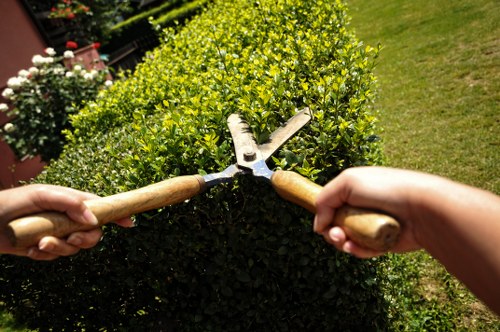
Crown thinning is the selective removal of smaller live branches from within the outer and inner canopy. The key point is that the overall size of the tree usually stays much the same. Instead of reducing height or shortening the tree’s outline, the work creates a more open crown. The structure stays natural, but the density is reduced. That makes crown thinning very different from crown reduction, pollarding, or full tree removal.
In Hayes, trees often need this kind of attention because local properties can be tight on space. Many gardens have fences, extensions, conservatories, sheds, patios, and parking areas close to tree cover. Some roads and estates also have mature trees that have become dense over time. In those situations, thinning the crown can help reduce shade, improve airflow, and lower the amount of leaf litter and branch rubbing caused by overcrowded growth.
It is also a useful option when a tree is healthy but simply too heavy-looking. A dense crown can trap wind and put extra stress on branches during strong weather. By opening up the canopy in a controlled way, a tree can often respond better to the conditions around it while keeping its character. For many Hayes homeowners, that is the ideal balance: a tree that still looks like a tree, but works better for the property.
Why local customers ask for crown thinning
People usually do not request crown thinning just for appearance. There is normally a practical reason behind it. In residential streets and estate gardens across Hayes, the most common concerns are reduced daylight, overhanging branches, awkward shading, and branches moving too heavily in the wind. In a small rear garden, even a modest improvement in light can make a patio, lawn, or seating area much more enjoyable.
Commercial customers often have different priorities. Office car parks, retail forecourts, shared access routes, and school grounds need trees that look well kept and do not interfere with users, lighting, or visibility. A canopy that is too dense can create gloomy areas, drop large amounts of debris, or make routine maintenance harder. Thinning the crown can help the space feel more open and easier to manage without the visual harshness of a stronger reduction.
There are also situations where crown thinning is chosen to reduce minor mechanical problems within the tree. When branches are tightly packed, they can rub together, cut into each other, and create wounds that invite decay. A selective thinning approach can remove some of that competition. That is one reason many local property owners prefer thinning over drastic cutting.
How crown thinning works
A proper crown thinning service starts with inspection. The arborist looks at the species, the tree’s shape, the strength of the branch structure, the location of any deadwood, and the issues affecting the site. The aim is not to remove branches randomly. Instead, the work should be guided by the tree’s natural structure and the specific reason for the visit.
The general process usually includes selective removal of smaller branches from throughout the crown, with extra care taken not to over-thin one side or create a lopsided result. The outer outline of the tree normally remains intact. This means the canopy looks cleaner and lighter, but not stark. A well-thinned tree should still feel balanced and appropriate for the garden or site.
In some cases, the work may also include light removal of dead, damaged, or crossing branches if they are affecting the tree’s form. However, if the tree is too large for the space, or if the branches are extending into roofs, cables, or access routes, a different service such as crown reduction may be more suitable. A local tree specialist can explain the difference so you can choose the right solution rather than paying for unnecessary work.
Benefits of crown thinning for homes and businesses in Hayes
Crown thinning can offer a useful mix of practical and visual benefits. For many customers, the most obvious change is improved light. A lighter canopy lets more sunlight pass through, which can help lawns, flower beds, and seating areas feel more usable. In gardens where the tree has become overly dominant, that can make a big difference to how the space is enjoyed.
Another major benefit is improved airflow. Better air movement through the crown can reduce wind resistance, which is especially helpful for exposed trees or trees with large, broad crowns. In urban and suburban settings, that can help trees cope better with local weather and reduce the chance of minor branch damage caused by branches colliding in gusts.
For commercial premises, crown thinning can also help with presentation and day-to-day use. An entrance area feels brighter, parking spaces feel less enclosed, and pedestrian routes can become easier to see and navigate. When a tree is managed properly, it supports the appearance of the site instead of overwhelming it.
Common benefits at a glance
- More natural daylight reaching gardens, driveways, and windows
- Reduced wind loading on the crown
- Cleaner, more open appearance without over-pruning
- Less branch rubbing and internal crowding
- Improved comfort around patios, paths, and entrances
- Better suitability for shared spaces and commercial frontages
When crown thinning is the right choice
Crown thinning is often the right choice when the tree is healthy enough to keep its shape but too dense for the location. It works well on mature trees that have filled out over time and now cast more shade than the property owner would like. It can also help when the canopy feels top-heavy or untidy after years of unchecked growth.
This service is particularly useful for trees in gardens where neighbours are close by. If a tree is causing tension because of shade, leaf fall, or overhanging branches, thinning can sometimes help reduce the impact while keeping the tree standing. It is also a sensible option for trees near parking spaces, where drivers may want more visibility and less clutter around the canopy.
That said, crown thinning is not always the answer. If a tree is unhealthy, badly structured, storm-damaged, or planted in a location where it has simply outgrown the space, the right solution may be different. A competent local team will be honest about that and will not push thinning where another approach is safer or more suitable.
What is included in a crown thinning service
A professional service should cover more than just cutting branches. It should begin with a discussion of your concerns and a proper look at the tree from ground level. From there, the work is planned around what the tree needs, what the space requires, and how best to keep the result natural and balanced.
Typical crown thinning work may include selective branch removal, light canopy balancing, removal of deadwood if identified during the visit, and careful management of waste from the site. In many cases, the team will also check clearances around buildings, fences, driveways, and pedestrian areas before starting. This is particularly valuable in Hayes, where access can be tight and where working around parked cars, narrow side entries, and shared paths often requires careful setup.
Most customers also appreciate a tidy finish. When tree work is complete, the site should be left neat, with brash and cuttings cleared away in an organised way. If you are booking a local company, it is worth asking what is included so you know exactly what level of service you are getting.
Service points customers often ask about
- Initial assessment of the tree and the problem you want solved
- Selective thinning to maintain a natural shape
- Attention to nearby property, fencing, paths, and vehicles
- Removal and management of arisings from the work
- Advice if another tree service would be a better match
Why choosing a local tree team in Hayes matters
There are real advantages to using a local team for tree work in Hayes. Local property layouts vary a lot, from terraced homes and side access routes to detached houses with established front and rear gardens, plus commercial premises and mixed-use sites. A team that works locally understands the practical constraints better than a distant provider who sees every job in the same way.
Access and parking are often part of the challenge. Some streets offer limited space for vans and equipment, and many gardens are only reachable through narrow side gates or shared passages. Local experience helps with planning, timing, and setup, which can save time on the day and reduce inconvenience to neighbours or customers. It also makes it easier to organise a visit that fits around local traffic and site conditions.
Working locally also means the team is more likely to understand the look and feel of the area. Trees in suburban gardens, residential estates, school grounds, and commercial frontages all need a slightly different approach. A good local arborist does not just cut the tree; they judge how the result will sit in the setting around it.
Residential crown thinning across Hayes
Homeowners often contact us because a tree has grown denser than expected, especially after a few years without maintenance. In back gardens, the issue may be deep shade over a lawn or patio. In front gardens, it might be branches obscuring the house, blocking light into windows, or creating a bulky appearance from the street. Crown thinning can help restore a more comfortable balance.
For many homes, the goal is to keep the tree but make living with it easier. That may mean brighter rooms, less debris, a more pleasant garden space, or reduced worry during windy weather. If the tree sits near a garage, extension, or boundary fence, thinning may also help reduce the sense that the canopy is crowding the property. This can be especially helpful in older areas of Hayes where mature planting has had many years to develop.
Where neighbouring gardens are close together, communication and careful working matter. Branches that hang over boundaries can sometimes cause concern, but the solution should be proportionate and respectful to the tree. A selective thinning approach can often offer a neater result than heavier cutting, especially where the homeowner wants to keep privacy and a natural screen.
Commercial crown thinning for businesses and managed sites
Commercial properties often need trees to look well maintained while also allowing the site to function properly. A tree outside a shop, office, care setting, school, warehouse, or hospitality venue should not create avoidable problems with visibility, access, or debris. Crown thinning can make the tree lighter and less intrusive while preserving the green, established feel that many businesses want.
On business premises, the practical value of tree care is often underestimated. Dense canopies can cast shade over signs, make entrances feel darker, and contribute to leaves building up in paths and gutters. They can also interfere with lighting and sightlines. Thinning the crown can help the site feel more open and easier to maintain, which matters for customers, staff, and visitors alike.
For managed estates and larger sites, consistency is important. If you have several trees that need the same treatment, a local arborist can work in a planned sequence so the setting looks coordinated rather than patchy. That kind of continuity is especially useful for facilities managers and landlords who want straightforward upkeep without unnecessary disruption.
How to prepare for crown thinning
Good preparation makes the work smoother, safer, and less disruptive. You do not need to do anything complicated, but a few simple steps can help the team get started without delay. If access is tight, it is useful to think about how equipment will reach the tree and whether gates, paths, or parking spaces need to be kept clear.
Before the visit, it helps to identify any specific concerns you have. For example, you might want more light into the rear room, better clearance over the driveway, or a tidier canopy near a neighbouring boundary. The more clearly you can explain the issue, the easier it is for the arborist to recommend the right level of work. If there are vehicles, outdoor furniture, or fragile items near the tree, moving them in advance is usually sensible.
Here is a simple preparation checklist for customers in Hayes:
- Clear access to the garden, driveway, or work area where possible.
- Move cars, bins, furniture, and garden items away from the tree.
- Let neighbours know if branches may need to be lowered through shared spaces.
- Point out any obstacles such as cables, sheds, greenhouses, or overhead lines.
- Make a note of your main goals for the work, such as more light or a lighter canopy.
Pricing factors for crown thinning
While exact prices depend on the job, there are several factors that usually affect the cost of crown thinning. Tree size is one of the main ones, because a larger canopy takes more time and requires more careful work. Species also matters, as some trees respond differently and have denser, more complex branch structures than others. The amount of access available can have a big impact too.
If a tree is in a back garden with restricted access, the team may need to work more slowly or use different equipment handling methods. If parking is limited nearby, setup may take longer. If the tree is close to a building, conservatory, boundary, or public-facing area, extra care may be needed to protect surrounding property. All of these things can influence the effort required and therefore the quote you receive.
Customers sometimes ask whether thinning or reduction is the cheaper choice. The answer depends on the tree and the work needed. A lighter selective thin may be straightforward, but a tree with access issues or a complex structure may take more time than expected. The best approach is to request a free quote after a site assessment so you know what is involved before deciding.
Why careful technique matters
It can be tempting to think of tree work as a simple trimming job, but the difference between a good result and a poor one is often the method used. Over-thinning can leave the canopy patchy and stressed. Cutting too much from one side can make the tree look uneven. Removing the wrong branches can create unnecessary wounds or reduce the tree’s natural shape.
A well-trained arborist aims to keep the tree healthy, stable, and attractive after the work is done. That means understanding where to remove growth, how much to remove, and which branches should be left alone. For mature trees in Hayes, this is particularly important because many have long-established structures and are part of the character of the property.
If you want the tree to look better without appearing heavily worked, technique matters just as much as the end result. Good crown thinning should look considered, balanced, and appropriate to the setting. It should not leave the tree looking stripped, hollow, or artificially shaped.
Areas covered around Hayes
Local crown thinning services are commonly requested across Hayes and nearby parts of West London where trees sit close to homes, roads, and business premises. Customers in surrounding neighbourhoods often need the same kind of help with dense canopies, shade management, and property clearance.
Areas and nearby places often served may include:
- Hayes town centre
- Hayes End
- South Hayes
- North Hayes
- Yeading
- Cranford
- West Drayton
- Hillingdon
- Southall
- Uxbridge
If you are just outside these places, it is still worth asking. A local tree care team can usually confirm whether your site is within the service area and whether access, parking, or timing needs to be arranged in advance.
FAQs about crown thinning in Hayes
Will crown thinning make my tree look smaller?
Not usually. Crown thinning is designed to reduce density, not drastically change overall size. The tree normally keeps its height and outline, but the canopy becomes lighter and more open.
Is crown thinning suitable for all tree species?
No, not every tree needs the same treatment. Some species respond well to selective thinning, while others may need a different approach. A site assessment helps determine the right method.
How much of the canopy should be removed?
That depends on the tree, its condition, and the reason for the work. The aim is usually a measured reduction in density rather than heavy cutting. A good arborist will recommend a level that suits the tree and location.
Can crown thinning help with shade in my garden?
Yes, it often helps with shade by allowing more light through the canopy. It can make patios, lawns, and seating areas feel brighter without removing the tree entirely.
What if branches overhang my neighbour’s property?
Crown thinning can sometimes reduce the impact of overhanging growth, but the right response depends on the tree and the boundary arrangement. It is best to discuss the issue before any work begins so the result is fair and appropriate.
Do I need permission for the work?
Some trees may be protected by a Tree Preservation Order or sit within a conservation area. If that applies, the work may need approval before it starts. A local arborist can help identify whether that is relevant to your tree.
Book your crown thinning service in Hayes
If your tree is blocking too much light, feeling too dense, or creating avoidable problems around your home or business, crown thinning could be the right solution. It is a practical way to improve the look and function of a tree while keeping its natural character. For many property owners in Hayes, that balance is exactly what they want.
Whether you need help with one garden tree or several trees across a larger site, a local team can assess the work, explain the options, and provide a clear quote based on the actual conditions on site. Request a free quote if you would like a professional opinion on the best way forward.
Book your service now if you are ready to improve light, airflow, and tree appearance with a careful, well-planned approach. A properly carried out crown thinning in Hayes can make your outdoor space more comfortable, easier to manage, and better suited to everyday use.
What to do next
- Share your main concern about the tree
- Ask whether thinning, reduction, or another service is most suitable
- Arrange a convenient time for a site visit or quote
- Prepare access details if the garden or site is difficult to reach
Contact us today to discuss your tree and arrange the next step.